
Landscape design of the Babolsar Water Authority Complex
In pursuit of creating an efficient space that is harmonized with its urban context and responsive to everyday functional needs, the landscape design project for the Babolsar Water Authority was proposed to our office. The project was defined with the aim of enhancing spatial quality, improving site legibility, and meeting functional requirements, taking into account the needs of both staff and visitors.
Based on an analysis of the existing conditions, the site"s potentials, and operational requirements, a series of design proposals were developed in alignment with user needs and environmental characteristics.
In this section, you can view the aerial map of the site, which clearly illustrates the study and design boundaries. The project’s location within the urban fabric of Babolsar, its access to main streets, and its surrounding context provide a unique opportunity to create a site with a distinct identity.
Landscape design is more than merely shaping the ground; it is an interaction between humans, nature, and architecture. It is a space that combines the functional needs of employees and visitors with a calm and pleasant visual experience. This design seeks to establish a meaningful relationship between natural and built elements (such as pathways, urban furniture, and vegetation), allowing each component to contribute to the architectural language of the project as a whole.
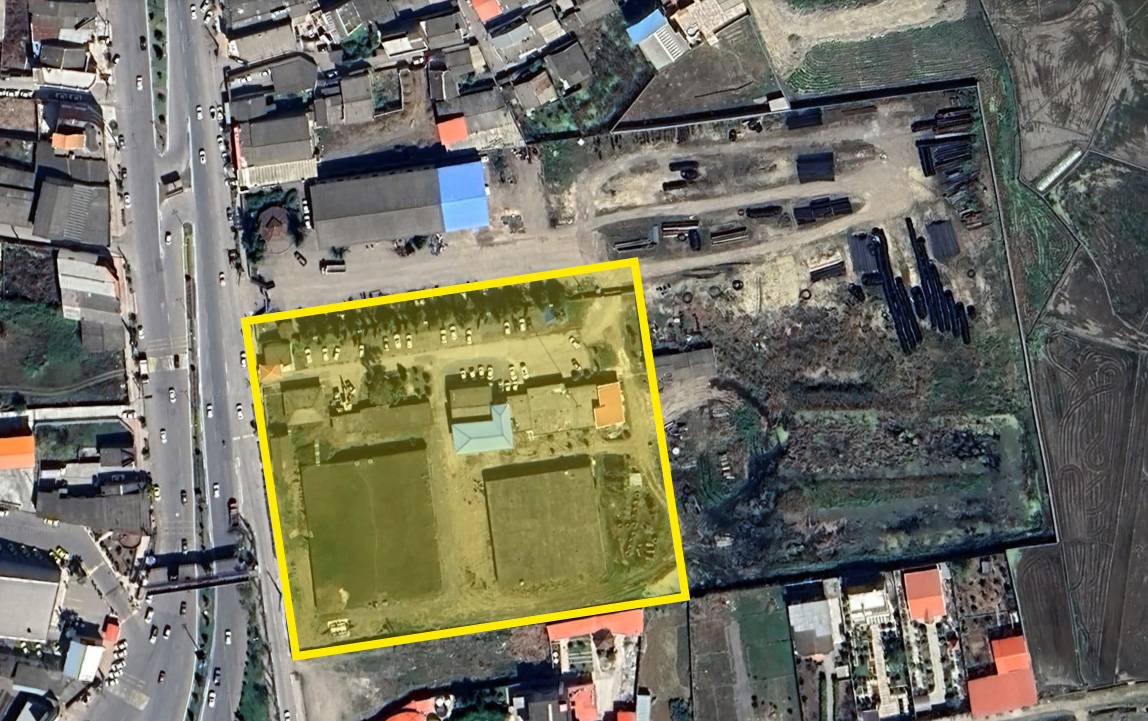
Alternative One – A Sustainability-Oriented Approach and Celebration of Water
In the first alternative, the design approach is based on the concept of sustainability and the celebration of water and nature—an idea aligned with the functional identity of the Water Authority complex. Accordingly, preserving and enhancing the existing green spaces, as valuable environmental assets, was prioritized. The overall design framework was organized with respect for the natural context and minimal intervention.
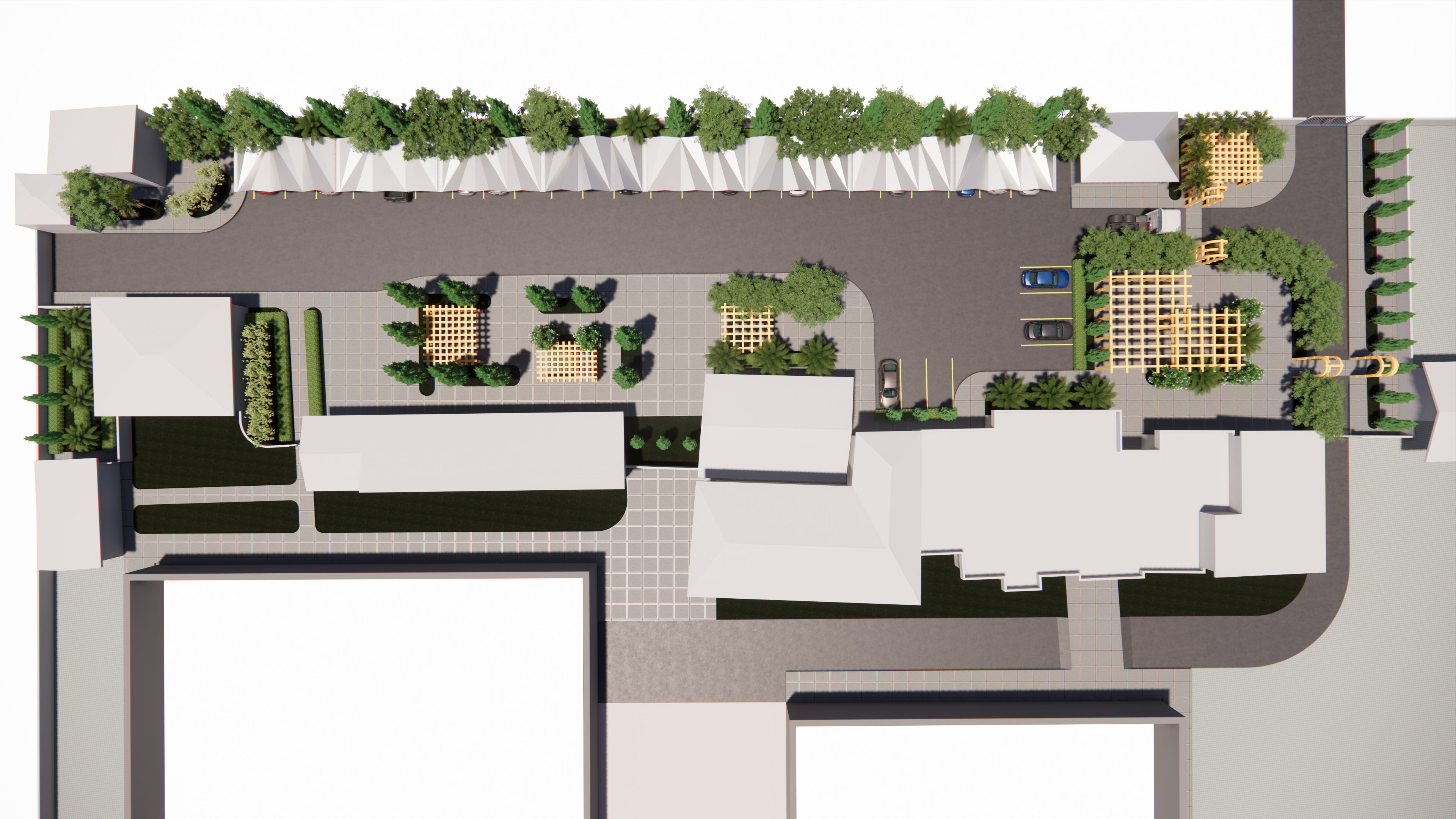
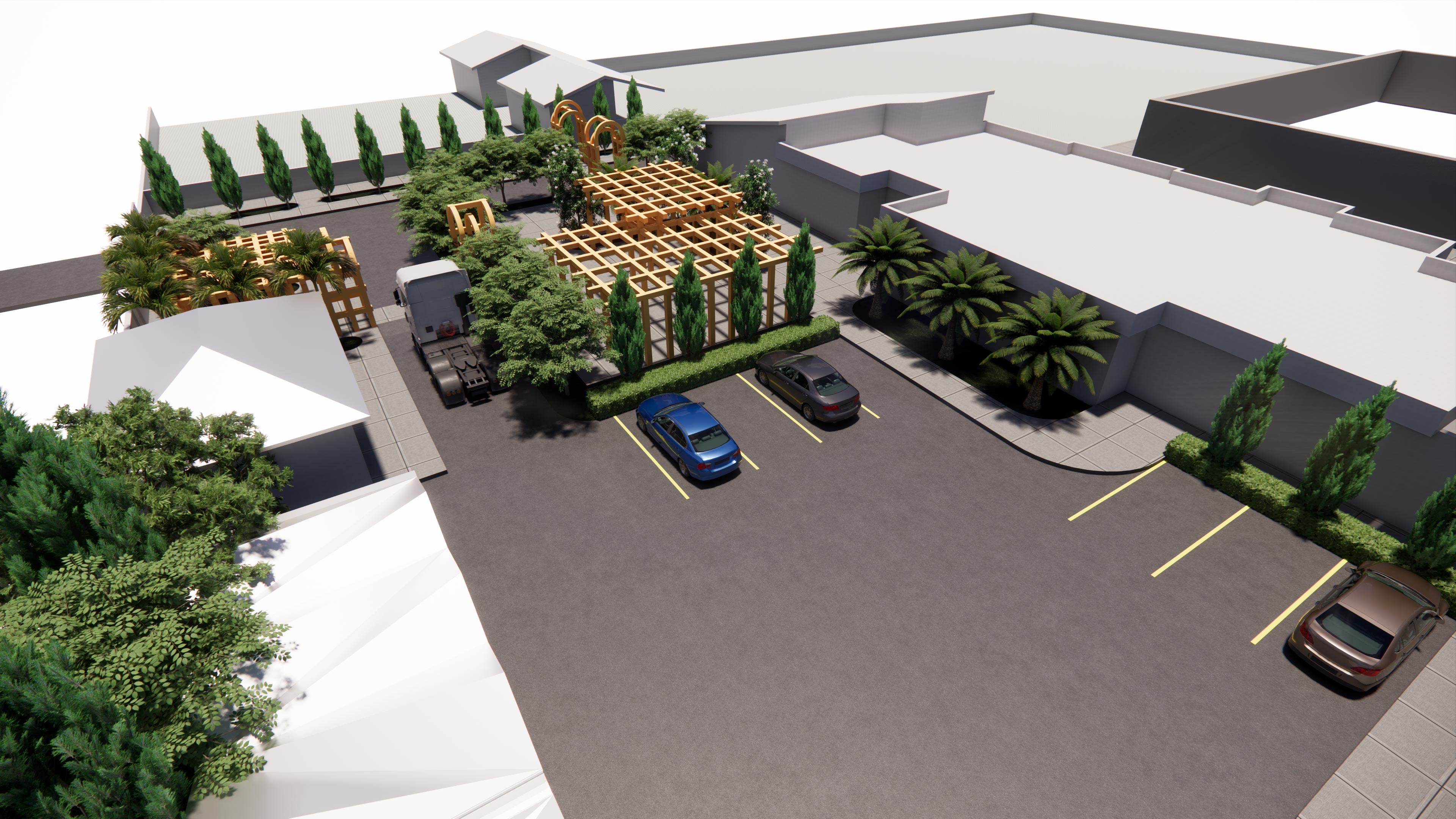
A clearly legible network of pedestrian and vehicular paths was designed to ensure separation of movement and provide smooth, safe access for staff and visitors. These paths are not merely connective elements, but integral parts of the spatial experience. Along them, “oases” are introduced as moments of pause and rest—shaded, calm spaces that allow for interaction, short stops, and relaxation within the site.
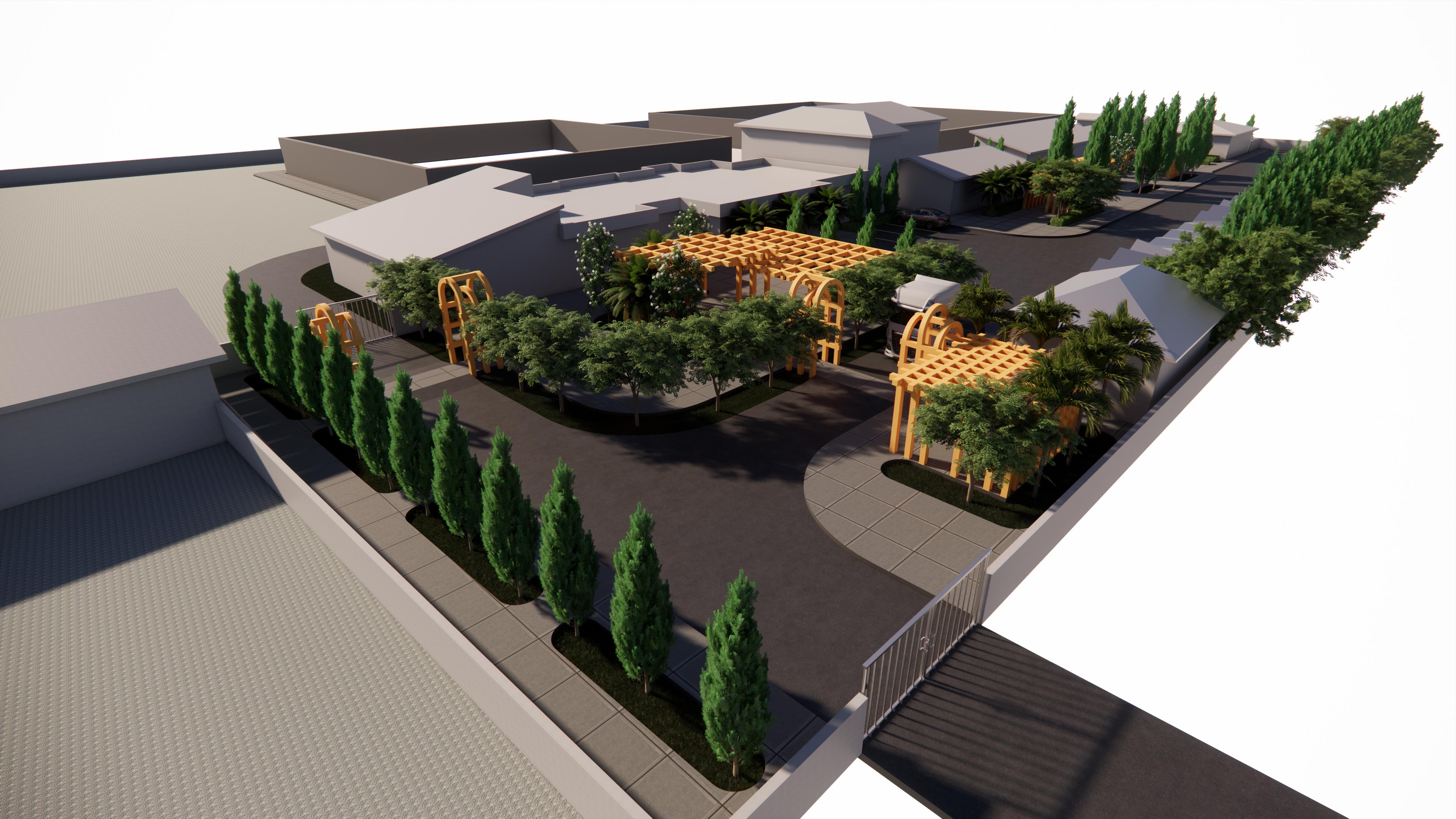
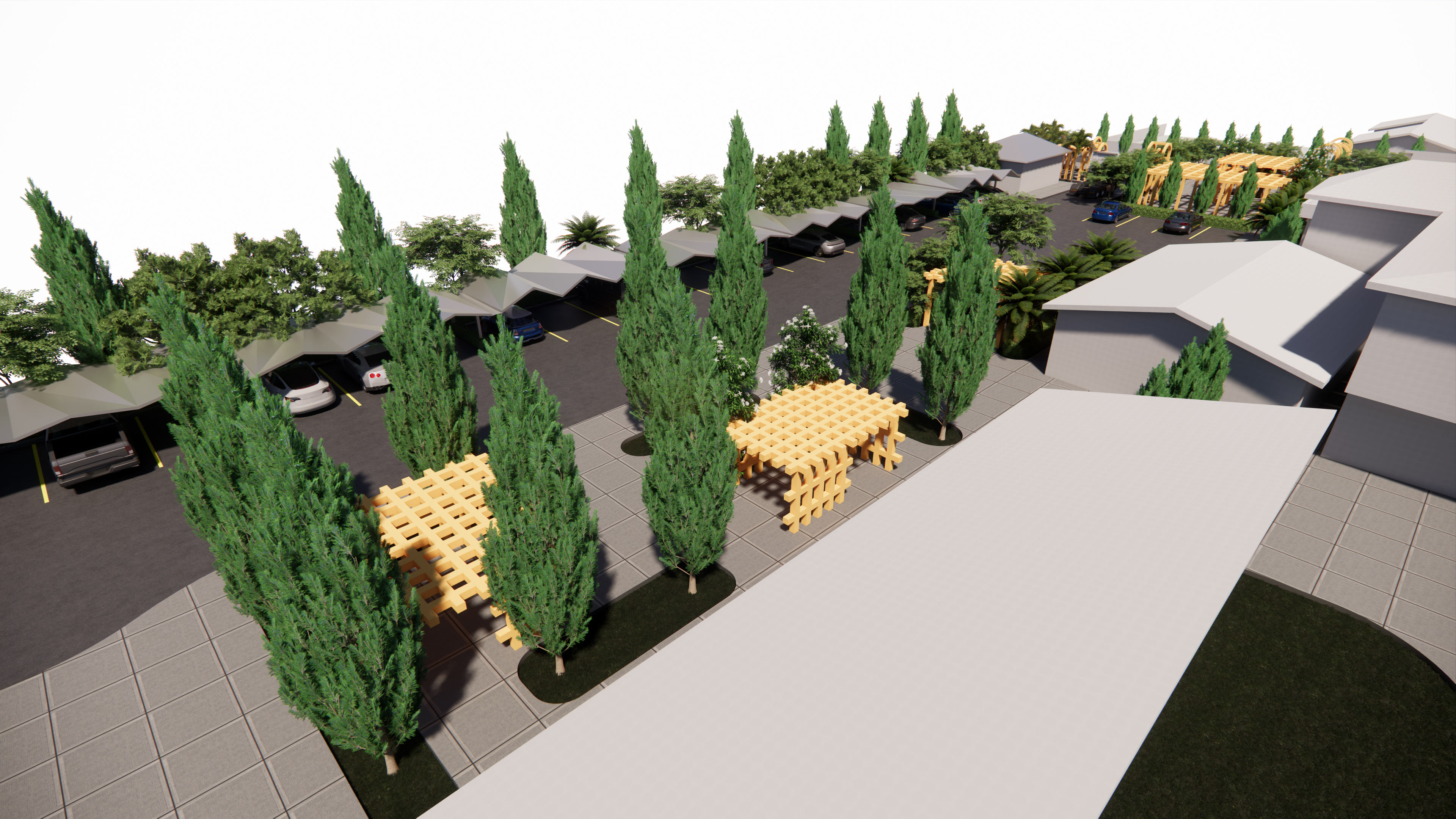
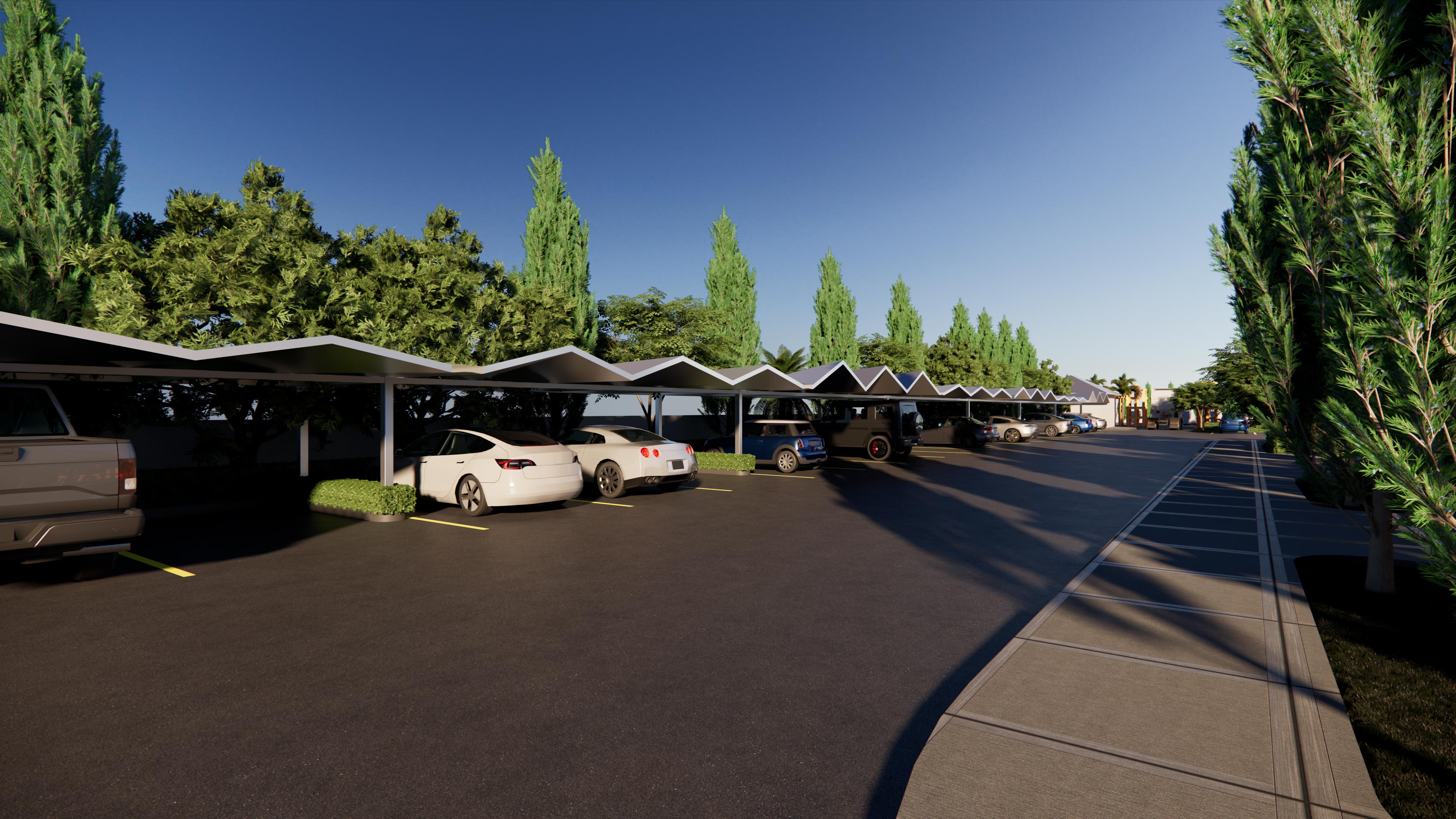
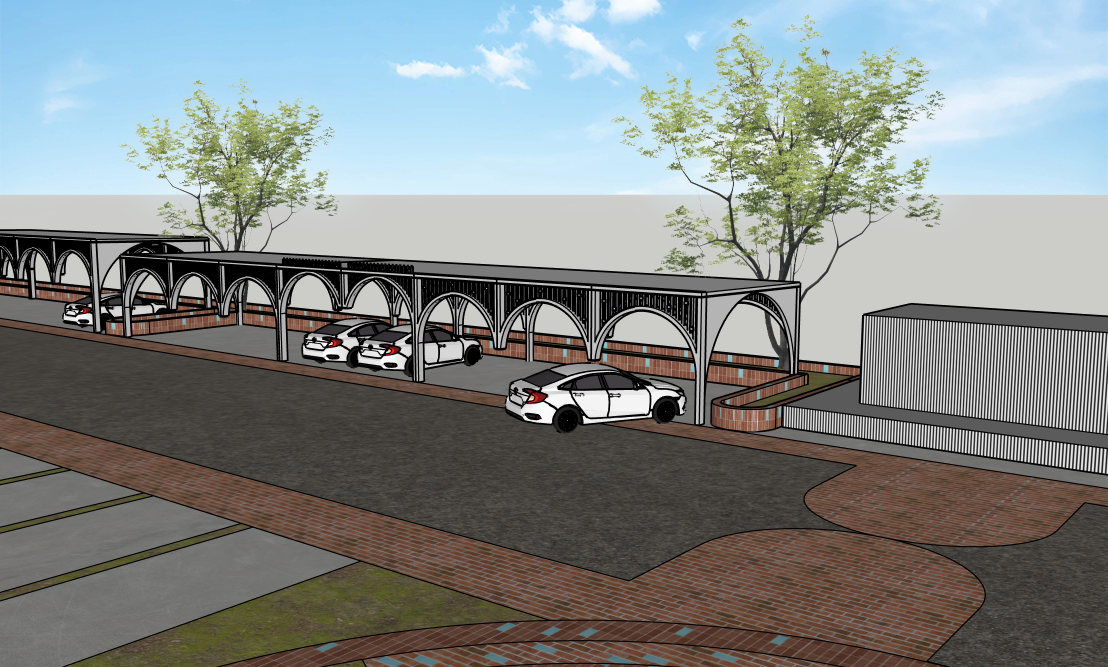
To address functional requirements, separate parking areas were designed for staff and visitors. The staff parking is covered, with a roof form inspired by folded architectural geometry. This dynamic form, with its rhythmic structure, avoids visual monotony and becomes a distinctive element within the site.
The roof is designed with a slope that enables the collection and redirection of greywater, allowing it to be reused within the daily consumption cycle—an efficient solution that reinforces the project’s sustainable approach.
The roof is designed with a slope that enables the collection and redirection of greywater, allowing it to be reused within the daily consumption cycle—an efficient solution that reinforces the project’s sustainable approach.
Alternative Two – Reinterpreting the Concept of Water in Architectural Expression
In this alternative, water is reinterpreted not merely as a functional element, but as a fundamental and identity-defining concept. Given that the project is associated with a water management institution, the design could not remain indifferent to this vital element.
In traditional Iranian architecture, water has always functioned beyond a climatic feature; it has served as an organizing axis of courtyards, a regulator of spatial hierarchy, and a mediator between humans, nature, and the sky. However, under contemporary conditions—particularly within an administrative complex with maintenance constraints and in the humid climate of northern Iran—the direct reproduction of traditional elements such as pools and water channels is neither sustainable nor functionally justified.
Thus, the design approach shifted toward abstraction—translating the essence of water without requiring its physical presence. In this framework, turquoise glaze was selected as a historical-cultural signifier. In the collective memory of Iranian architecture, this material conveys meanings of water, sky, freshness, and the sacred.
In this project, turquoise functions not merely as a color, but as a signifier, creating semantic continuity across the site through its rhythmic repetition on walls and key elements.
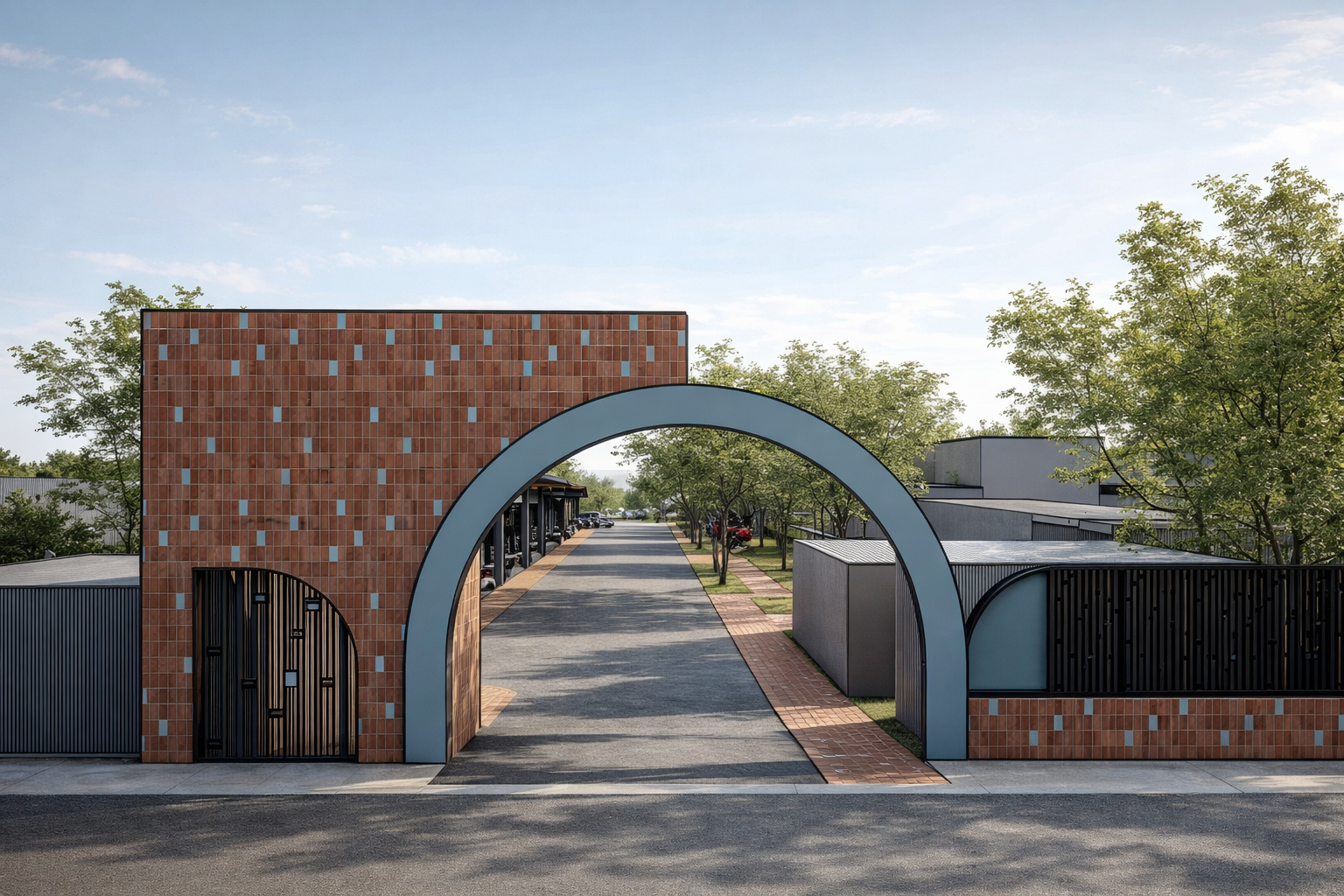
Placed alongside brick—an earthy, warm, and local material—a dialectic emerges between fluidity and solidity. Brick represents stability, ground, and historical continuity, while turquoise evokes flow, change, and life. This contrast reflects the relationship between water and earth—a relationship that has historically generated spatial meaning in Iranian architecture.
The design process began with the entrance gate and surrounding walls, as these elements form the first layer of perception. The entrance was redefined as an urban marker to enhance legibility and strengthen the identity of the complex. The controlled repetition of turquoise glaze across elements creates a continuous visual motif, subtly reinforcing the project’s concept throughout the site.
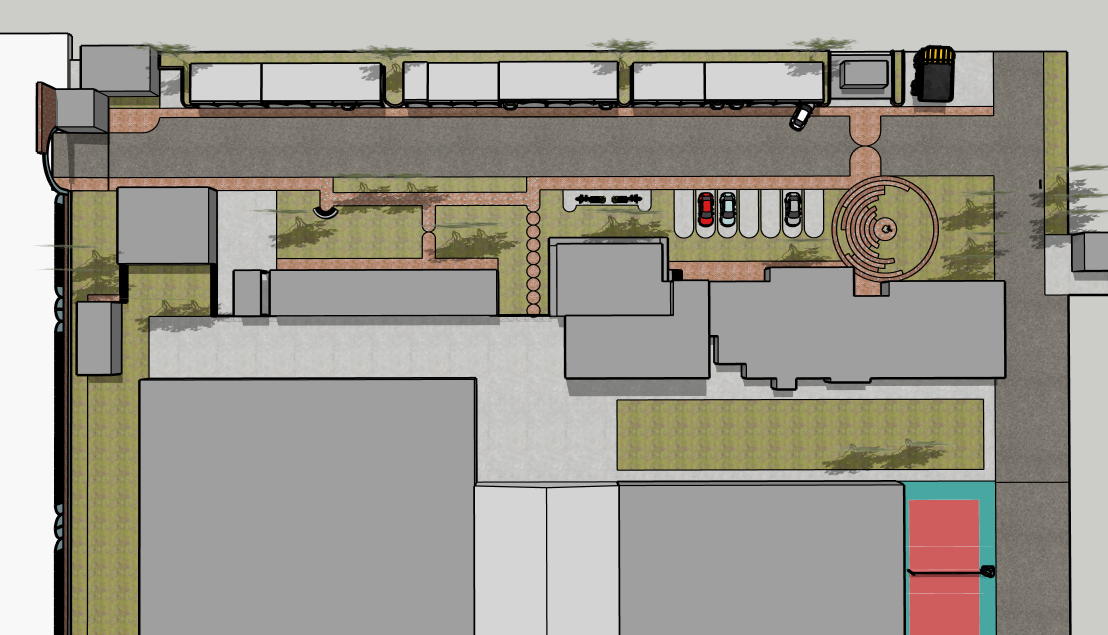
At the site scale, the design continues with respect for existing trees and the enhancement of environmental quality. Instead of imposing rigid geometry, more open space was allocated to vegetation, while pedestrian paths were designed as narrow, permeable bands weaving through green areas. These pathways create a gradual and calm spatial experience, guiding users from the urban environment into a balanced administrative-natural setting.
As a result, the green space ratio has significantly increased, improving both the climatic and visual quality of the site.
or staff parking, metal canopies were designed in harmony with the project’s overall material and color palette, maintaining a unified design language. These structures are not merely functional coverings, but part of the spatial rhythm of the project.
To avoid visual monotony, wide planting beds are introduced between parking rows. These green interruptions reduce the visual dominance of vehicles, improve natural ventilation, and help mitigate surface heat. Additionally, designated areas for visitor parking and proposed bicycle parking encourage more sustainable modes of transportation.
One of the key challenges of the project was the considerable distance between the administrative building and the main entrance, resulting in weak legibility and lack of invitation. To address this, the entrance was redefined through a deliberate change in ground material and the creation of a layered, plaza-like spatial sequence.
This entrance plaza establishes a spatial hierarchy, creating a moment of pause before entry and guiding users toward the building. The change in texture and color of the paving acts as an “urban carpet,” distinguishing the entrance from surrounding areas and enhancing both functional clarity and spatial perception.
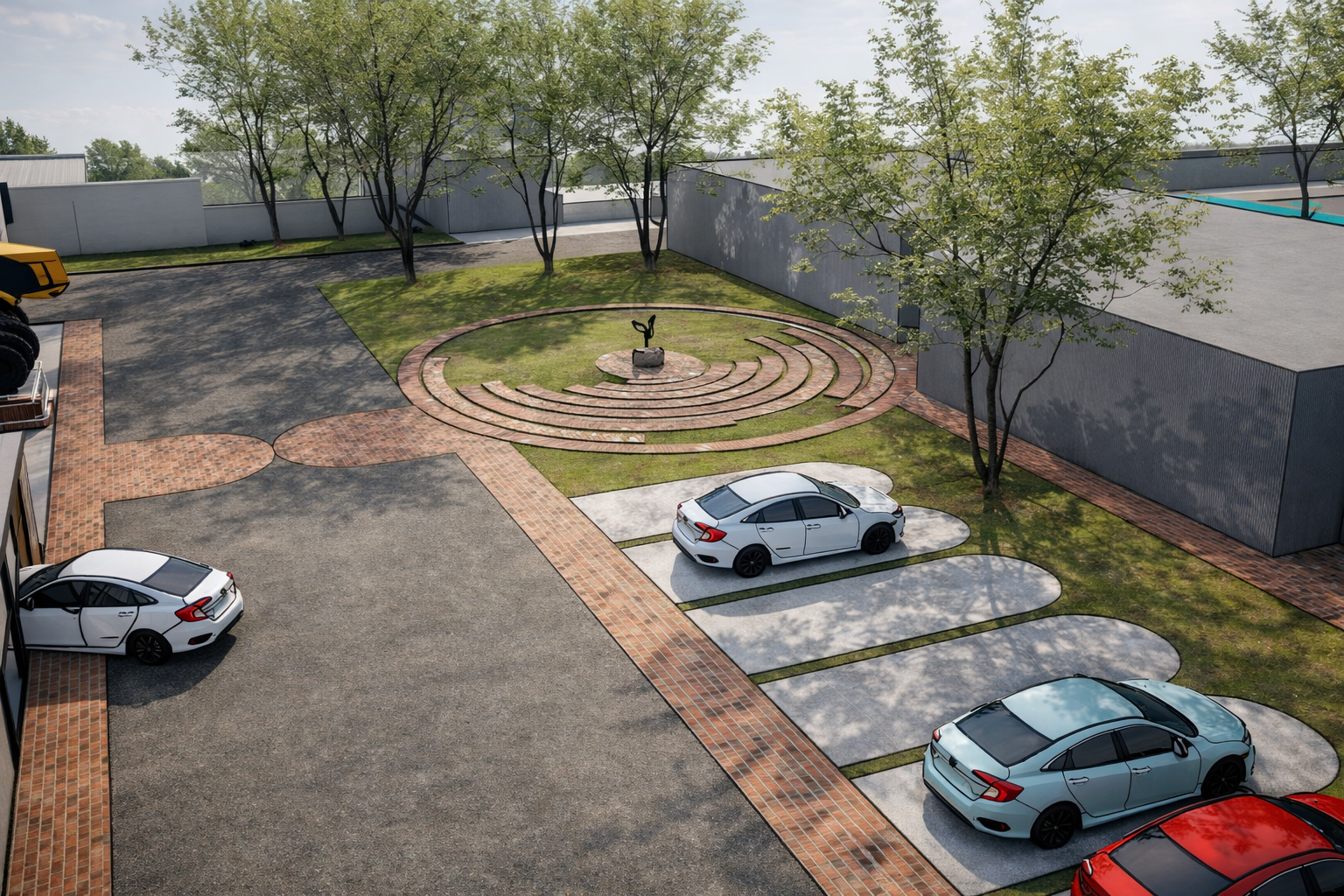
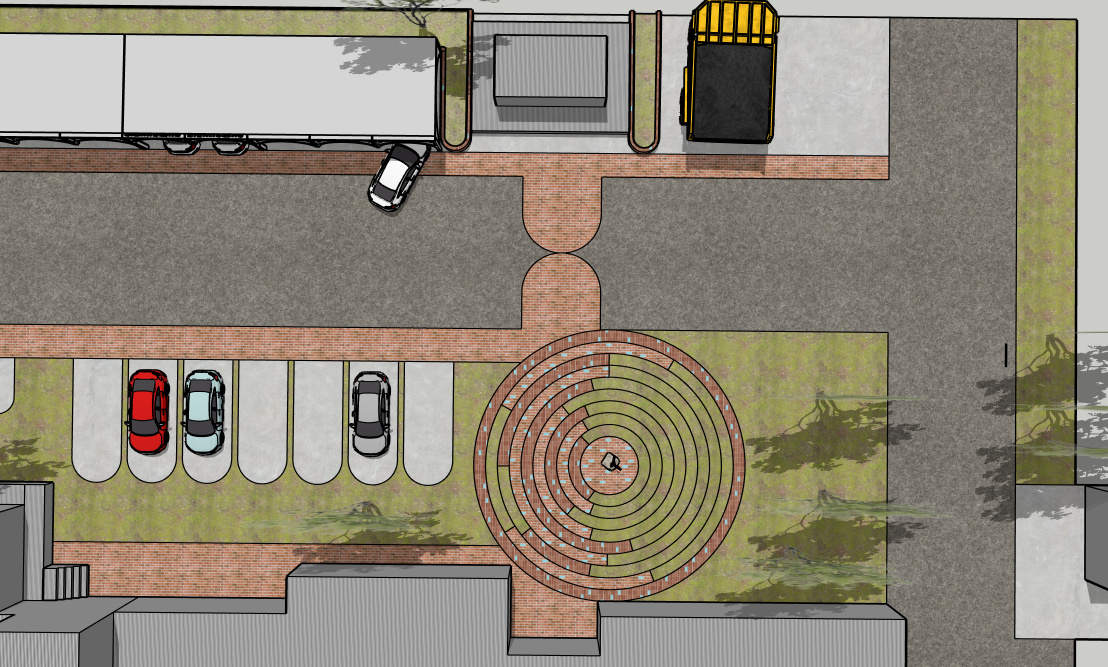
Overall, the second alternative represents an effort to translate the concept of water into a contemporary, sustainable, and practical architectural language—an approach that allows the spirit of water to flow through the project without relying on its physical presence.
The spatial organization is based on strengthening the natural context and redistributing green surfaces. Instead of imposing rigid geometry, the circulation network is defined as permeable strips within green areas. These paths are not merely routes of movement, but tools for gradual spatial perception—creating a time-based experience that guides users through layers of nature.
The increased green space ratio in this alternative is not only an aesthetic decision, but also an ecological and climatic strategy that enhances the site’s thermal and visual quality.