
Designing of Palestine Street Pedestrian Walkway – Babolsar
- Project Name: Palestine Pedestrian Walkway
- Designer: Omid Hosseinian Engineering Group
- Main Axis Length: Approx. 400 meters
- Location: Babolsar, Babolrud River Bank
- Typology: Urban Regeneration, Landscape Architecture, and Tourism Development

The core challenge was the reconciliation of the city’s vehicular dominance with the human imperative. We converted an overwhelmingly car-centric street into a dedicated pedestrian zone. This action not only reclaimed spatial priority for the pedestrian but, through strategic traffic management (path closure and guaranteeing residential connectivity), delivered a visual and acoustic tranquility previously lost to traffic noise. The addition of an open-air parking lot at the entrance managed visitor influx and eased access for tourism fleets.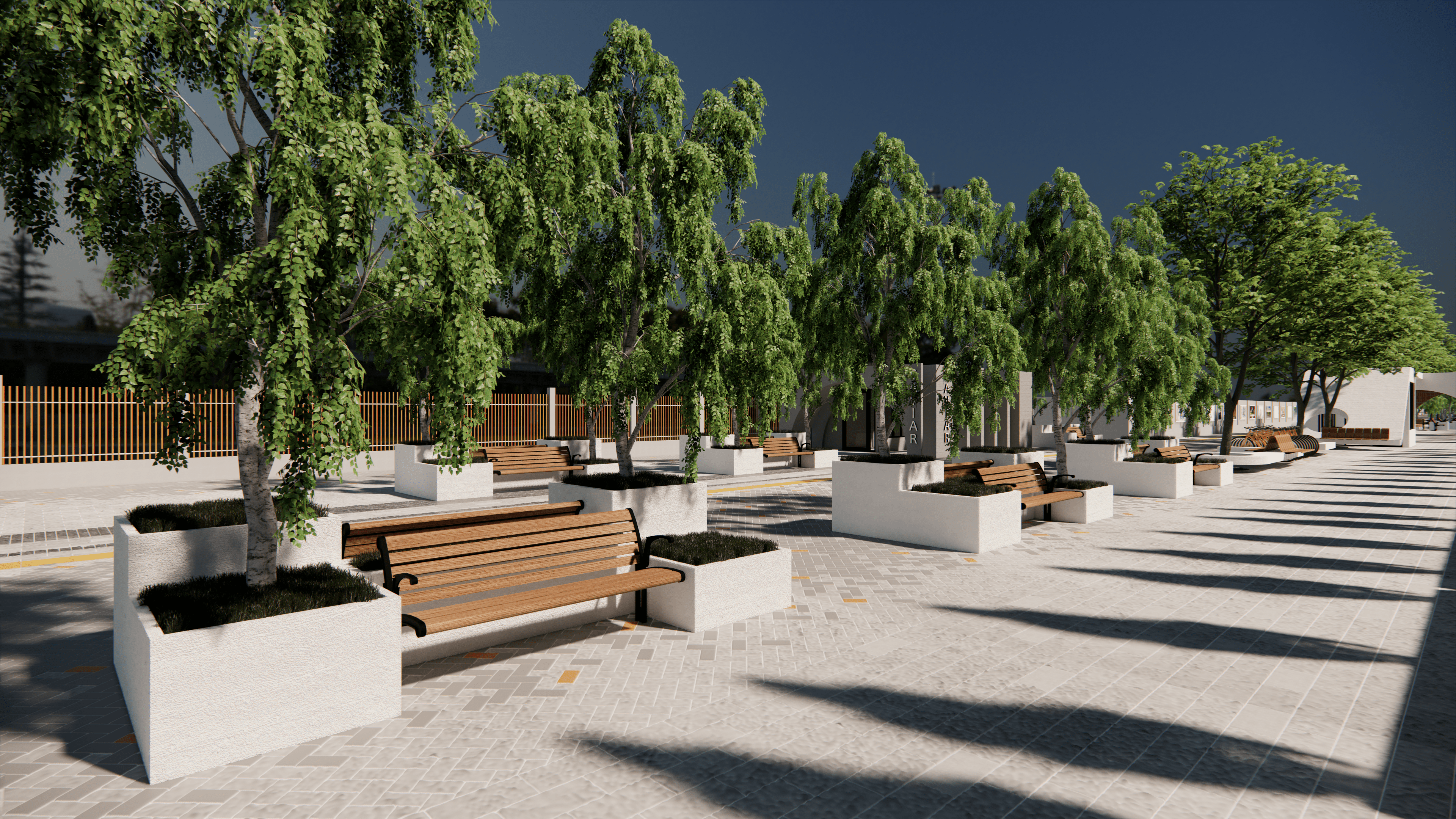

- Landscape Design: Dialectic of Form, Texture, and Ecology
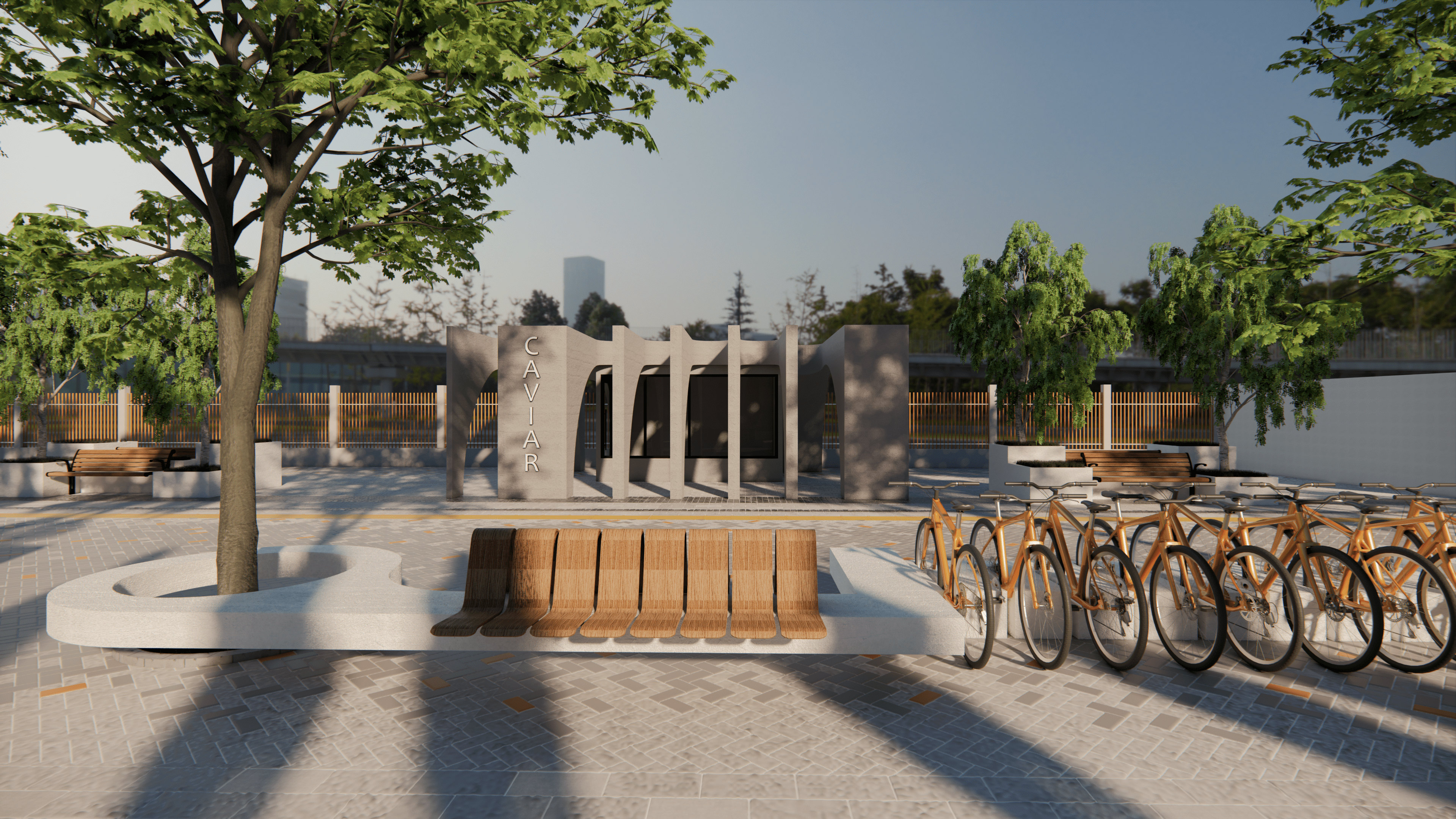
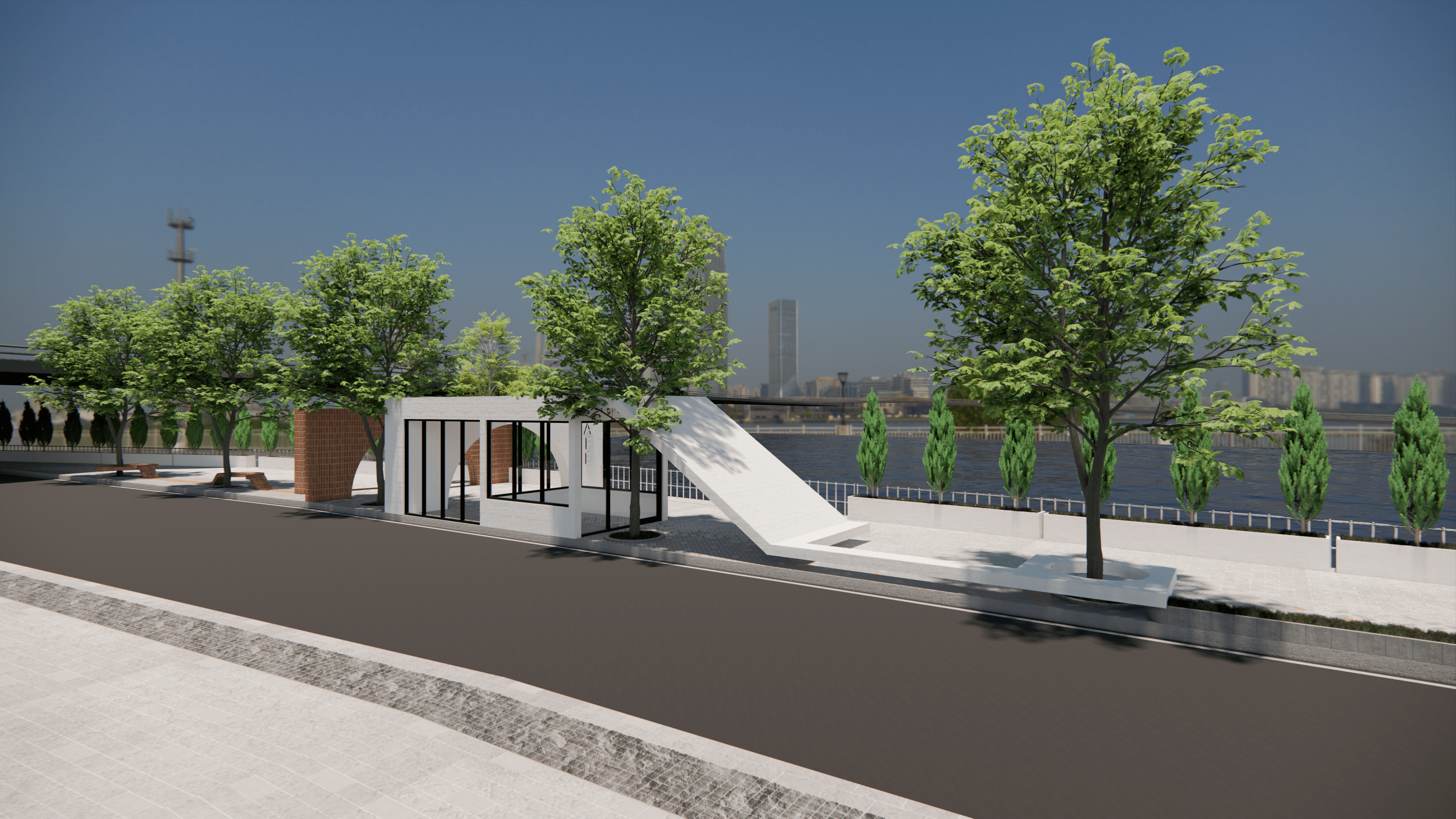
The formal system establishes a sophisticated dialogue between fluid and fixed geometry. The use of organic, sweeping lines in the paving layout and planter design is a direct architectural tribute to the natural flow of the Babolrud River, ensuring the integration of the site’s ecological context, including the preservation of existing mature trees. Contrasting this fluidity, fixed geometric forms—in the shape of arches and cubic framings—are strategically placed. These elements act as controlled view-framing devices, transforming the riverbank edge into a sequence of urban galleries and defining distinct zones of contemplation.
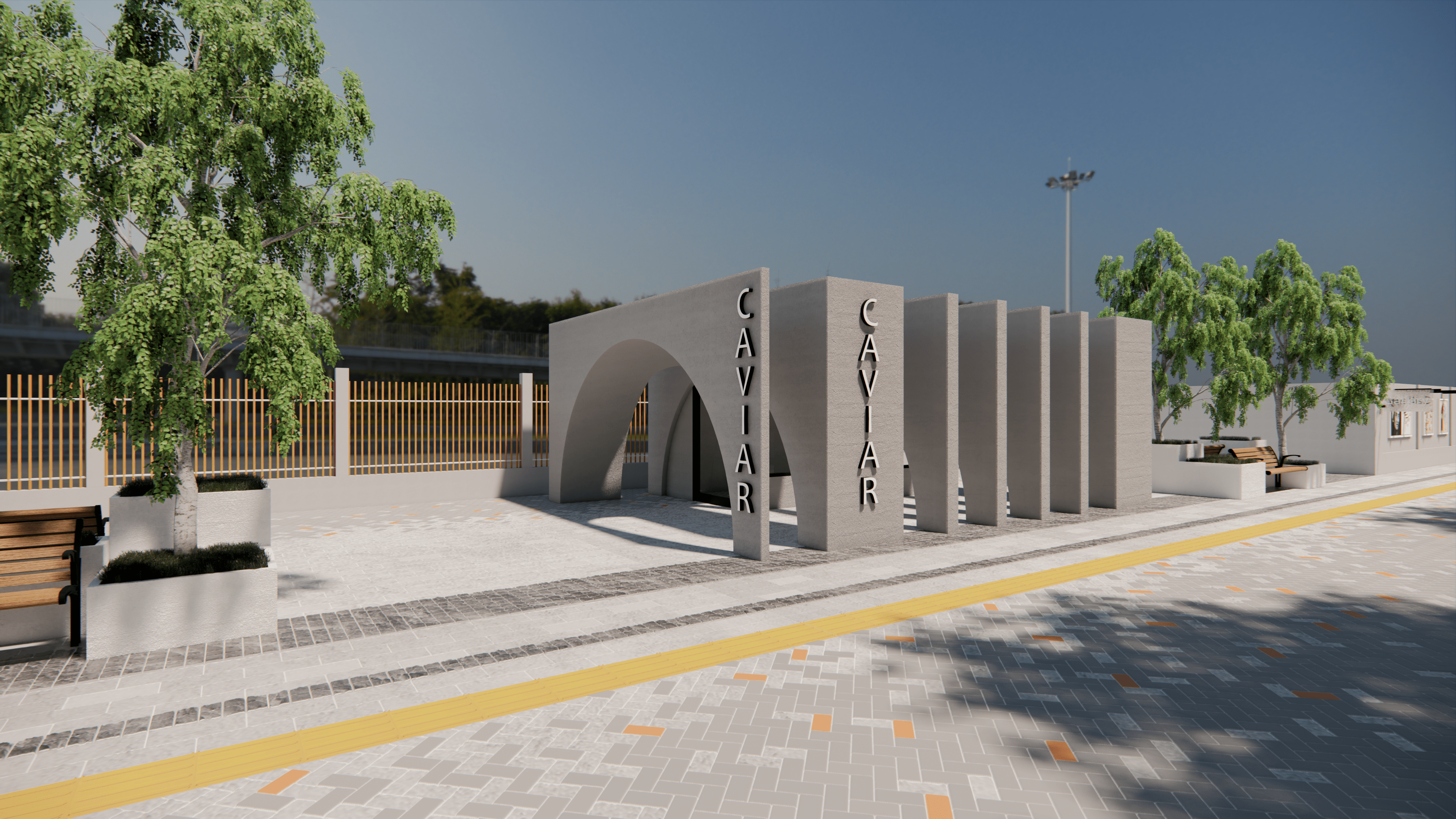

In material selection (Hardscape), the focus was on haptic quality and durability. Nostalit paving blocks were chosen for the main walkway to evoke the robust, culturally resonant feel of historic European pedestrian avenues, providing a durable, non-slip, and visually rich texture. In commitment to social equity and Universal Design, specialized tactile paving for the visually impaired is seamlessly integrated along the route. Furthermore, variations in the Nostalit laying patterns serve as subtle textural landmarks around functional nodes (cafés, booths), defining zones implicitly while maintaining the path’s overall visual coherence.

- Programming, Sustainability, and Sensory Lighting
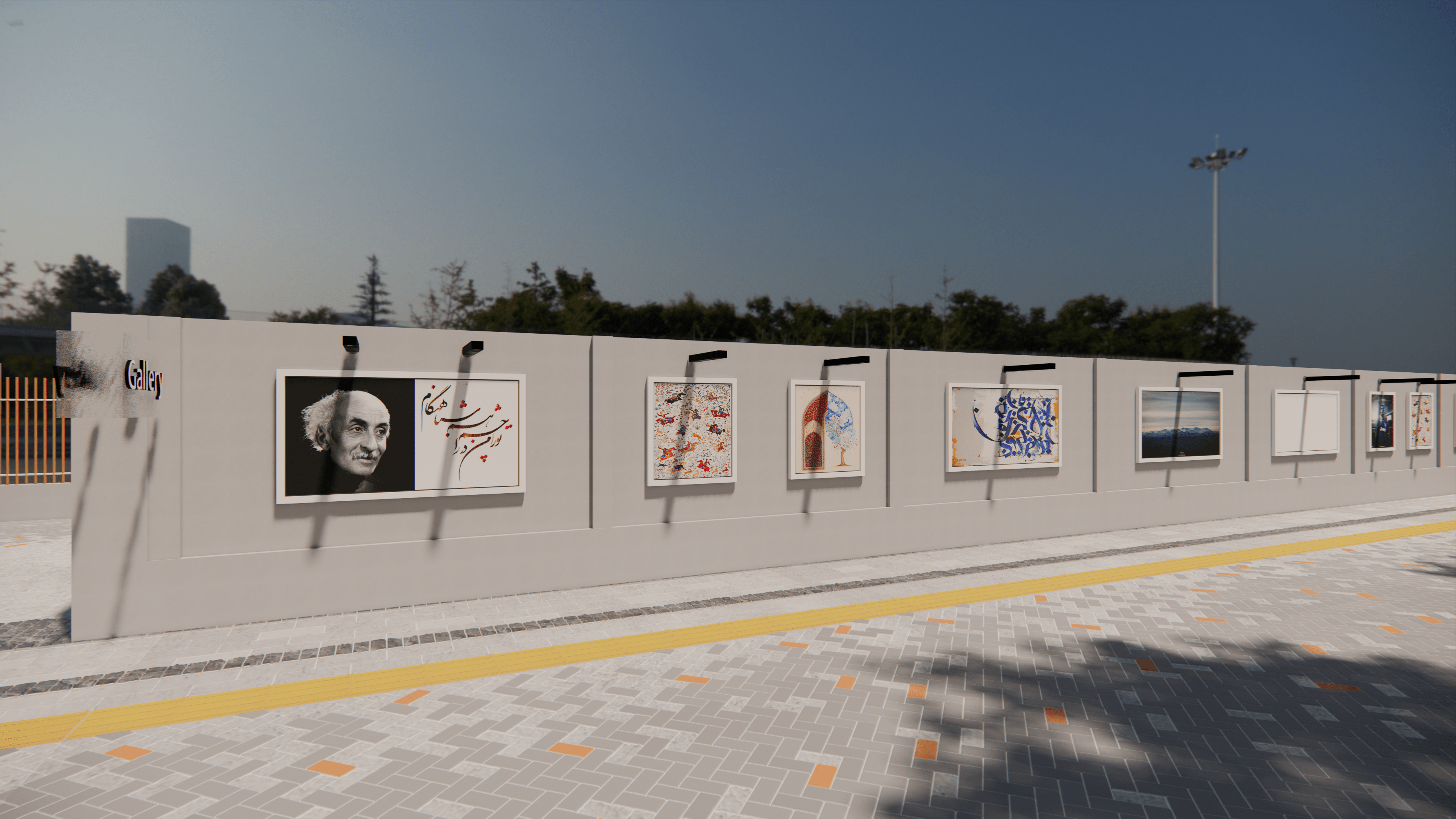
The walkway is programmed to ensure round-the-clock activation with a mix of permanent and temporary functions. Permanent elements include two recreational boat stations (along the 400m axis), service booths, and three minimally designed cafés that provide vital social anchors. A key sustainable statement is the equipping of these cafés with solar panels, serving as a visible declaration of the project’s commitment to renewable energy integration within the public realm. The addition of a temporary Wall Gallery enhances the project’s capacity for hosting varying cultural and artistic events, boosting its social capital.

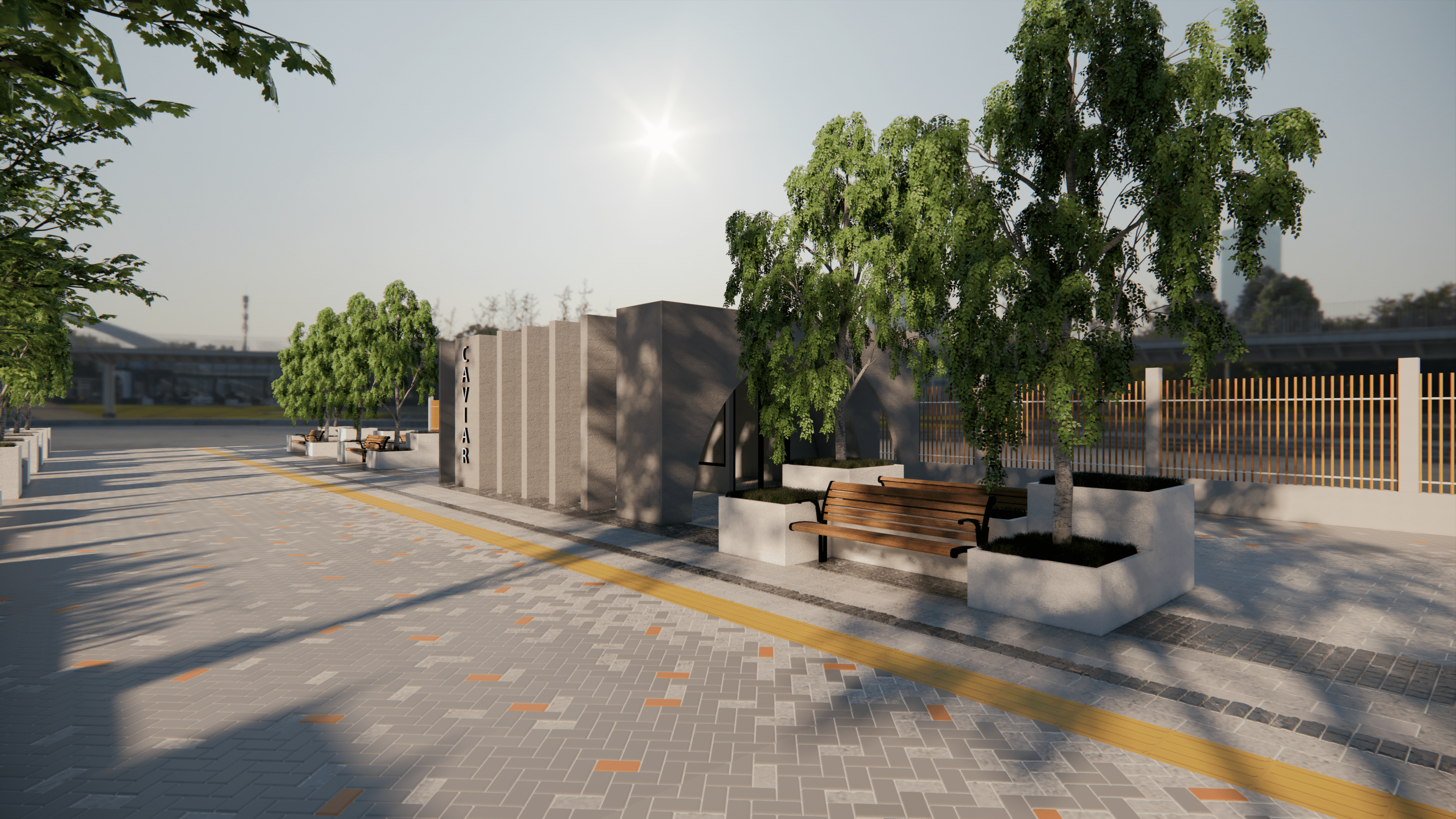
The night-time lighting scenario is precisely engineered for passive guidance and atmospheric enhancement. Continuous linear lights recessed beneath the planter edges create a visual pathway that implicitly conveys a sense of flow and movement, avoiding the harshness of high-mast spot lighting. At key congregation points (cafés and booths), the luminance (intensity) and color temperature (Kelvin) of these linear strips are subtly modulated, visually prioritizing these zones and contributing to a layered, inviting nocturnal urban experience.